
MDL is free and simple: few elements, a single connector, and anything can connect to anything as long as it makes sense. The same drawing goes from business to data modeling, at different levels of abstraction. These are the most common uses:
- Notation: The MDL 2.0 elements and links in a single drawing.
- Business: Actors, screens and external systems, with numbered links.
- Technical: Client-side, security, server-side, cloud, network, API gateway, cores and databases.
- Data: Databases with tables and fields, composition and specialization.
- OPS — One Picture Solution: The whole solution in one picture.
- Reference architecture and framework: Layers, adapters and technologies.
- DDD — Domain-Driven Design: Bounded contexts and domain relationships.
Beyond the uses below, MDL also draws processes (swimlanes with ellipses as steps) and the big picture of tiers and layers. Every example on this page is open or fictional.
Notation
Before the examples of use, the notation components themselves and the difference between a regular link and a cross link.
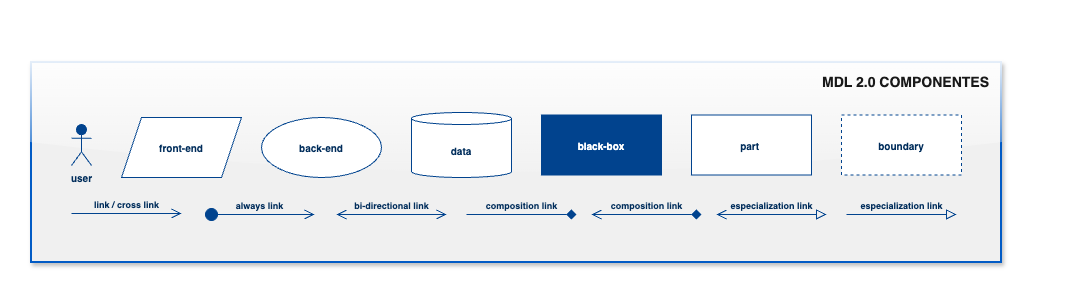
MDL 2.0 components
The notation elements (user, front-end, back-end, data, black-box, part and boundary) and the link ends: arrow, always link, bidirectional, composition and specialization.
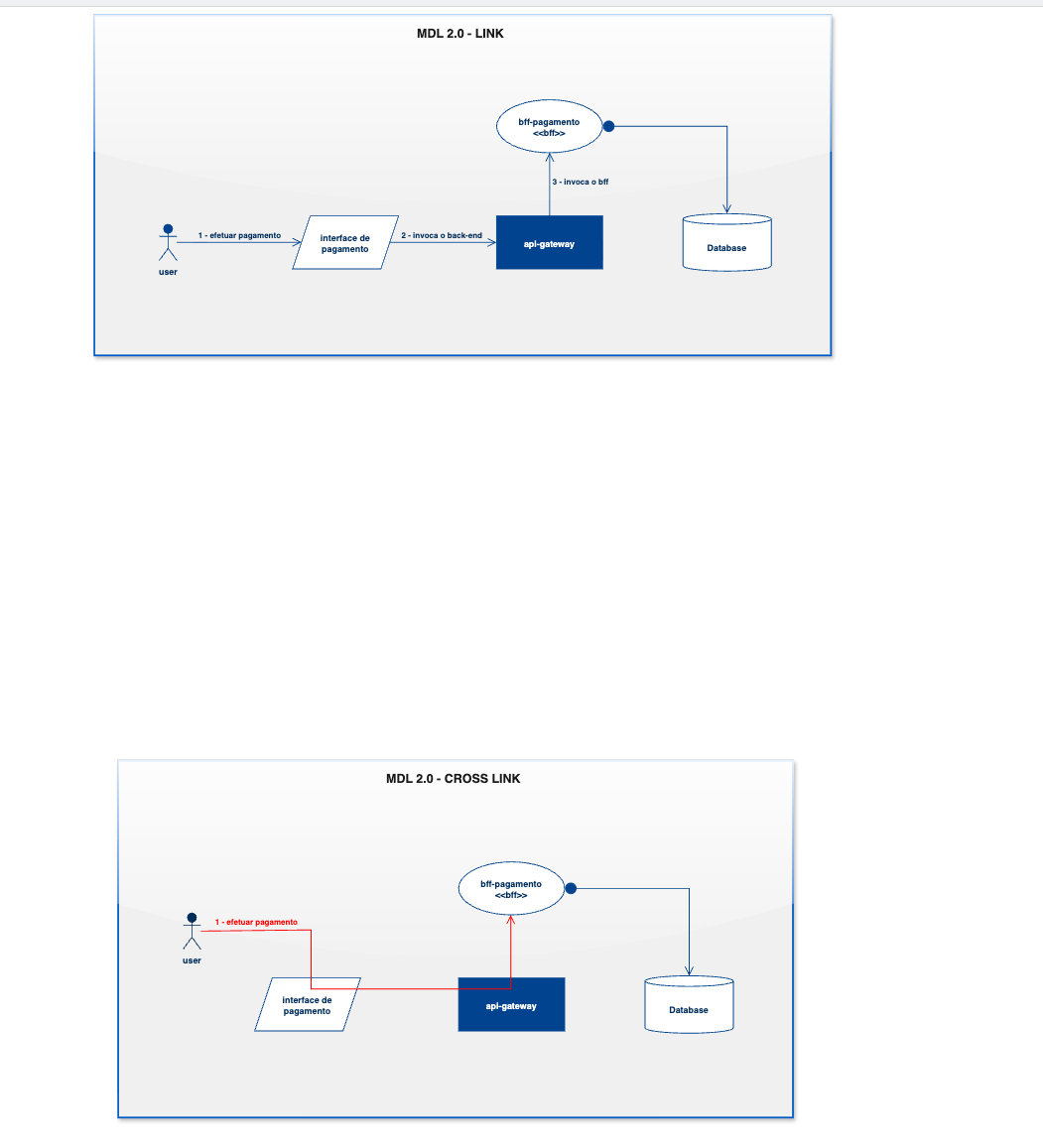
Link and cross link
Above, a payment with numbered links (1, 2, 3) that say what happens in each step. Below, the same flow with a red cross link that passes over the interface and the gateway.
Business
The business drawing shows actors, screens and external systems connected by numbered links, and each number says what happens in that step.
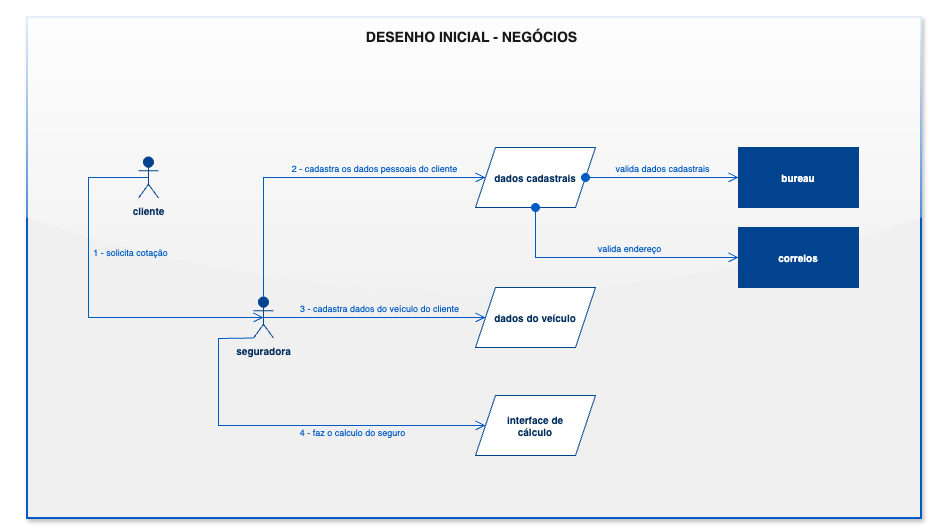
Business drawing
A fictional insurance quote example: two actors, three screens and two external systems, with the steps numbered 1 to 4.
Technical
The technical view puts the same business into the layers of the solution: client-side, security tools, server-side, cloud, network, API gateway, cores (services) and databases, with external systems kept apart.
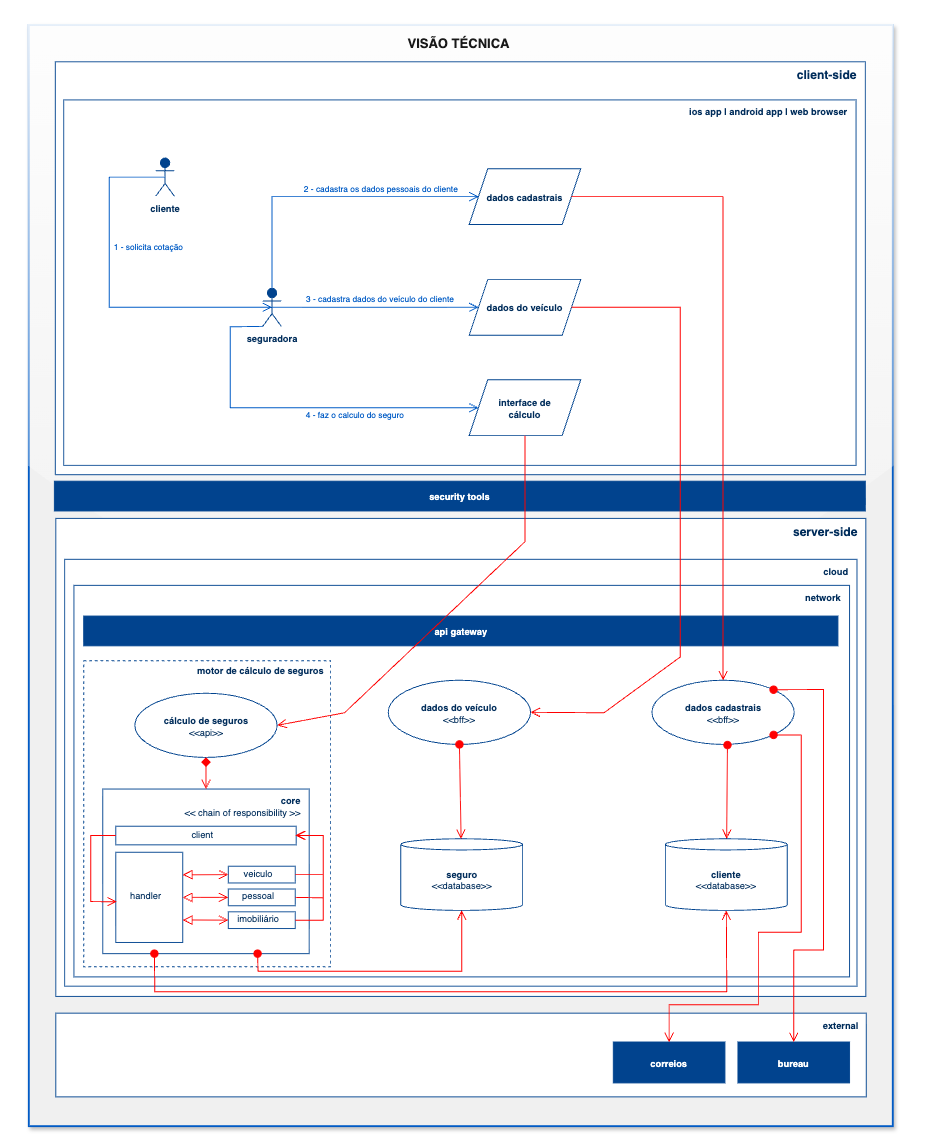
Technical view
The same example as a technical view: from the screen to the core and the database, crossing security, cloud and network through red cross links, with the external systems at the bottom.
Data
The data view shows the databases with their tables and fields, and the composition and specialization between tables.
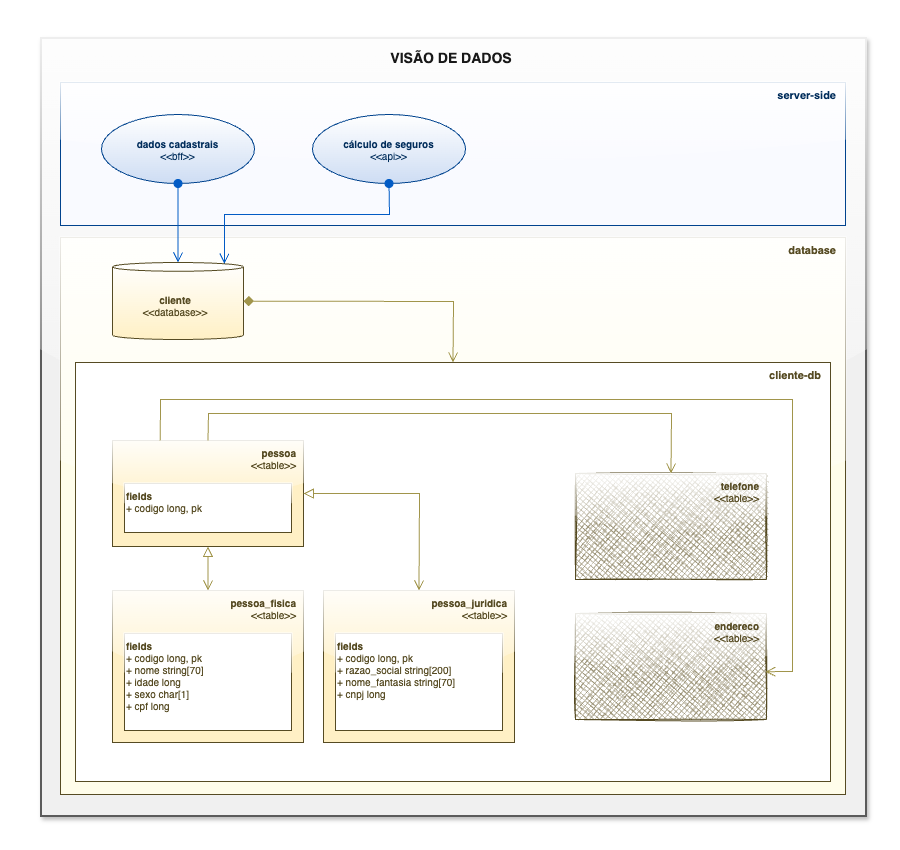
Data view
A database with its tables and fields, showing composition, the specialization of person into individual and legal entity, and two tables that are only indicated.
OPS — One Picture Solution
The OPS (One Picture Solution) puts the whole solution in one picture: screens and states alongside, the cores (services) and the specification in comments, with methods, routes, messages and error and success rules.
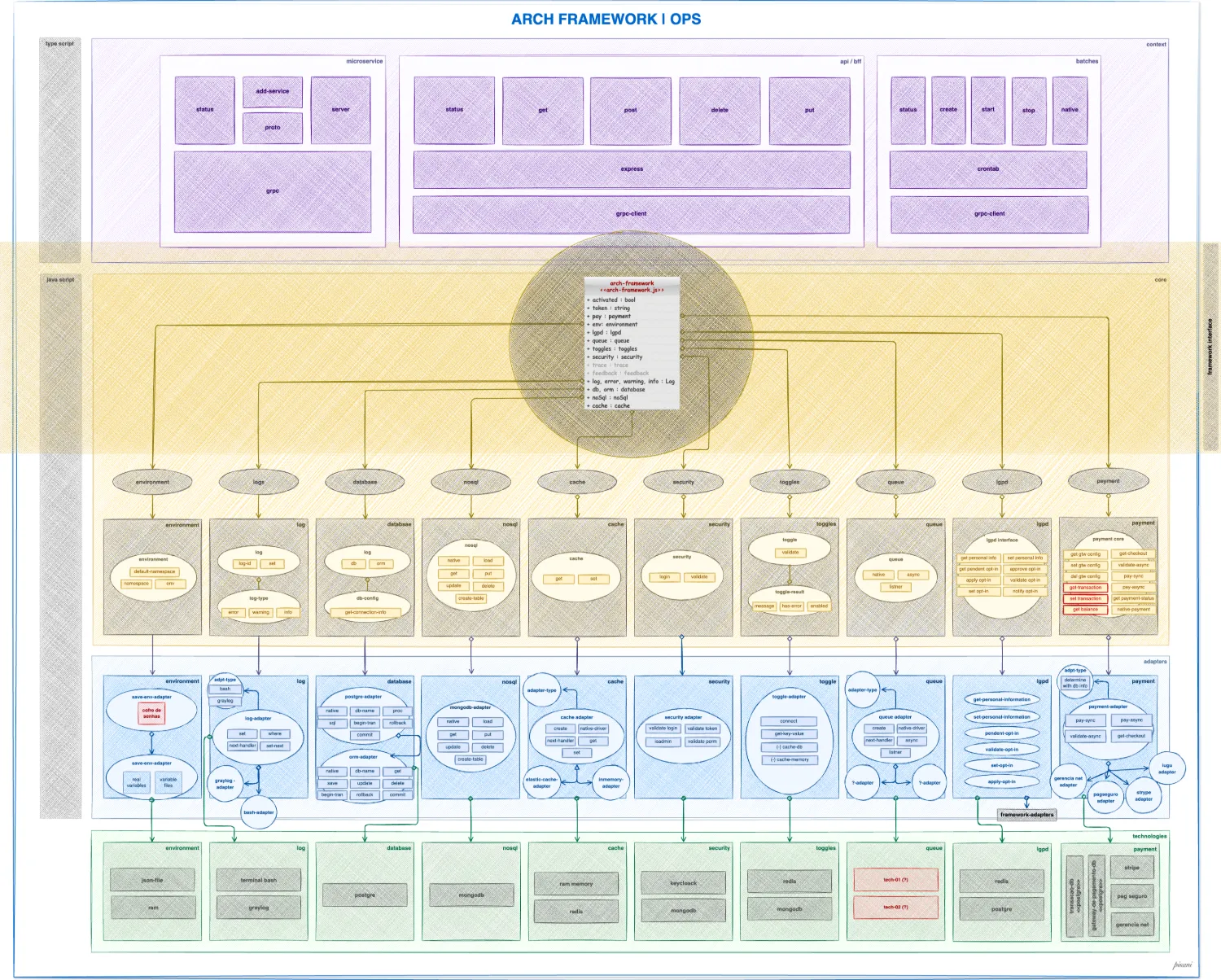
ArcH Framework — OPS
The OPS of the ArcH Framework: the context (microservice, API/BFF and batches), the core with the framework interface and, for each module, the adapters and technologies.
Reference architecture and framework
Reference architecture and framework: the layers, adapters and technologies of a solution, drawn in the same notation.
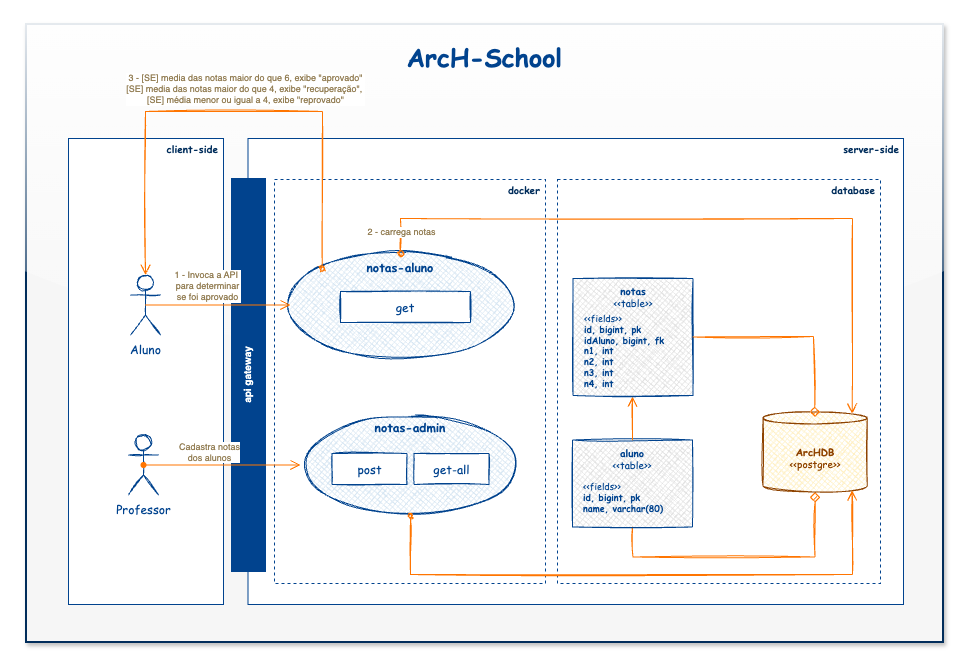
ArcH-School
A school solution with two APIs behind an API gateway and a database with the tables aluno and notas, with numbered links and an [IF] decision based on the average grade.
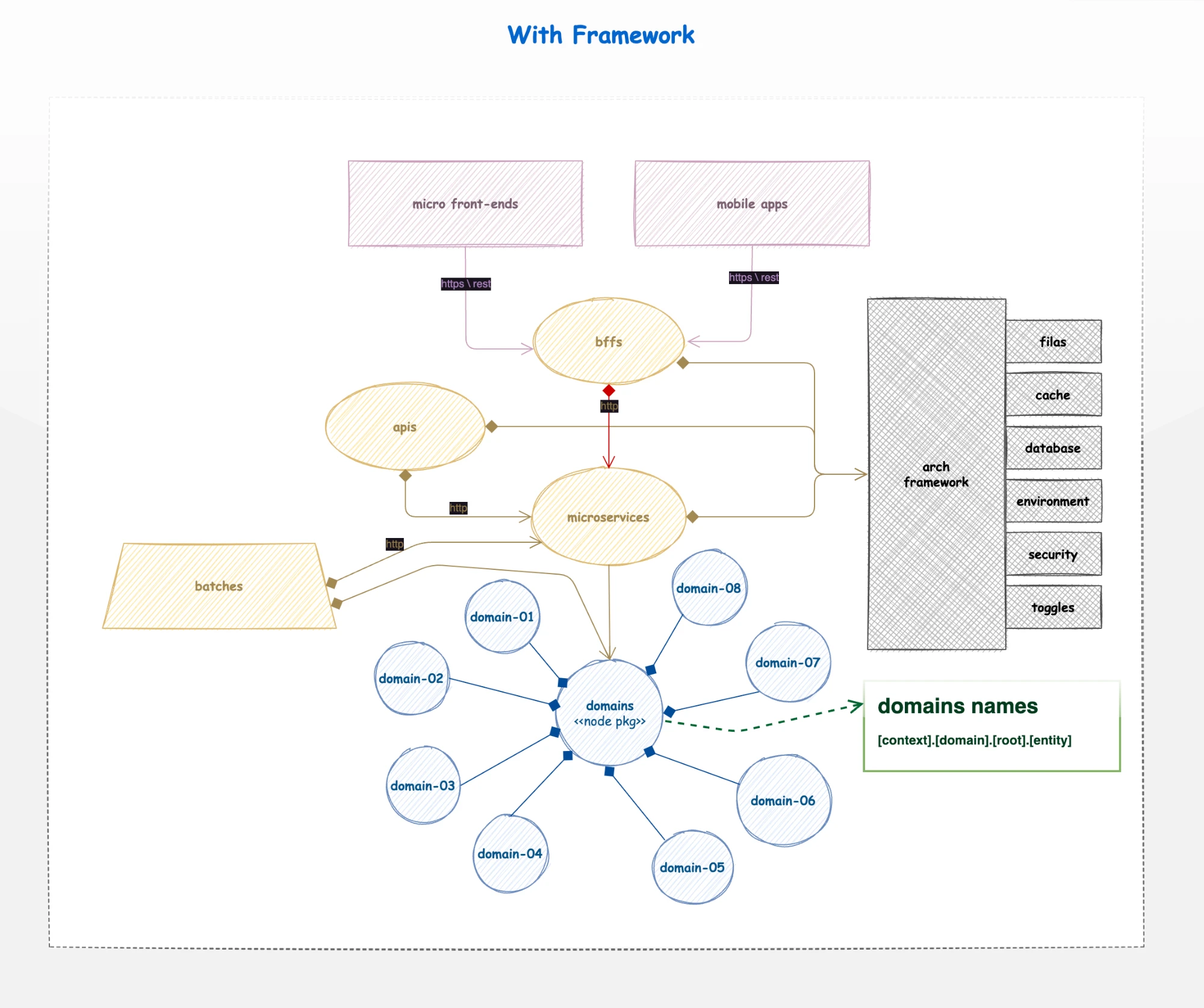
With Framework
A reference architecture with a framework: front-ends call BFFs, APIs and microservices, all supported by the arch framework, and the domains are organized in a package named by context.
DDD — Domain-Driven Design
In DDD, bounded contexts become boundaries or ellipses, and the relationships between domains (upstream and downstream, shared kernel, anti-corruption) become links.
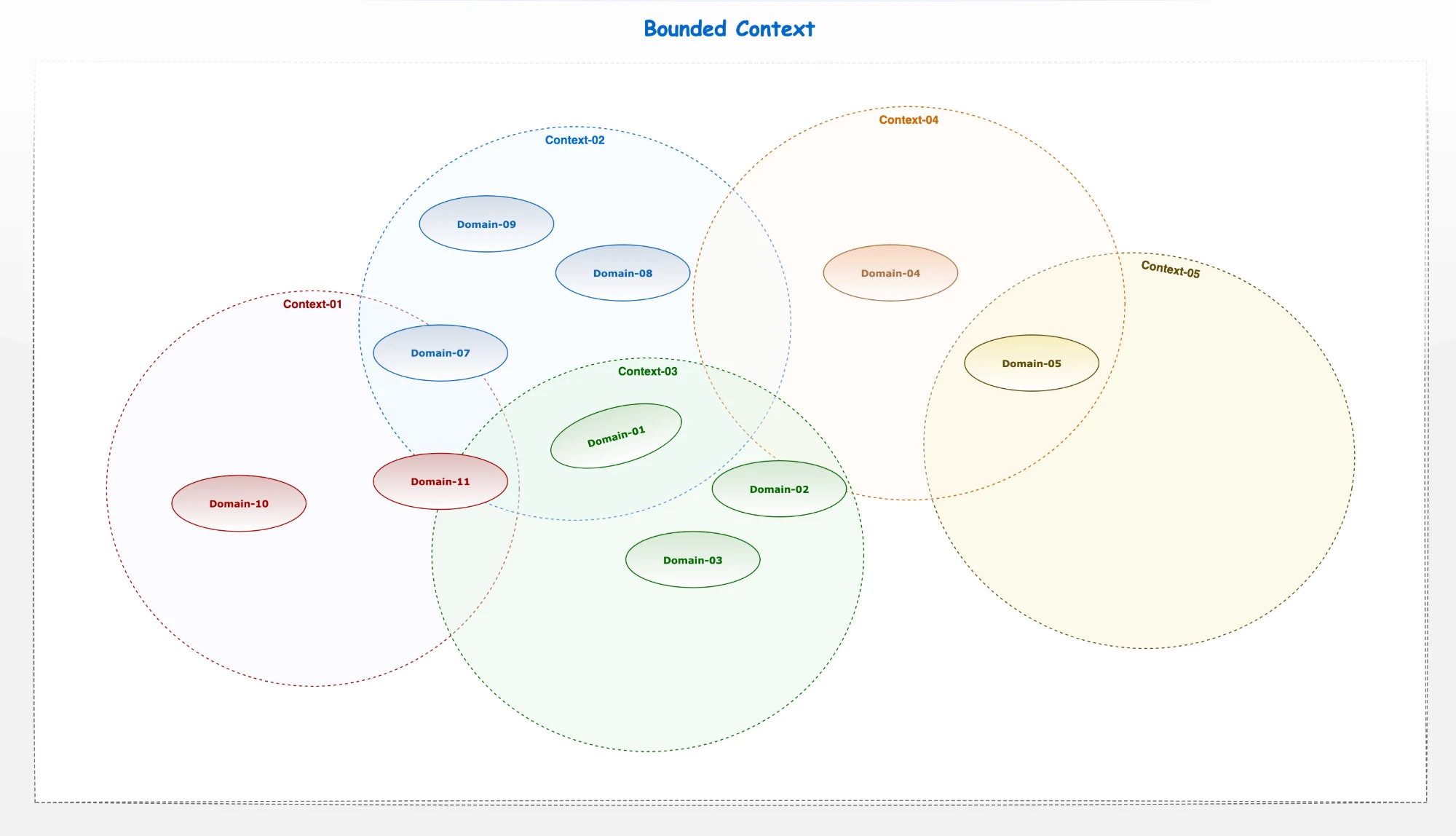
Bounded Context
Five bounded contexts drawn as boundaries, with the domains as ellipses inside them and some contexts overlapping.
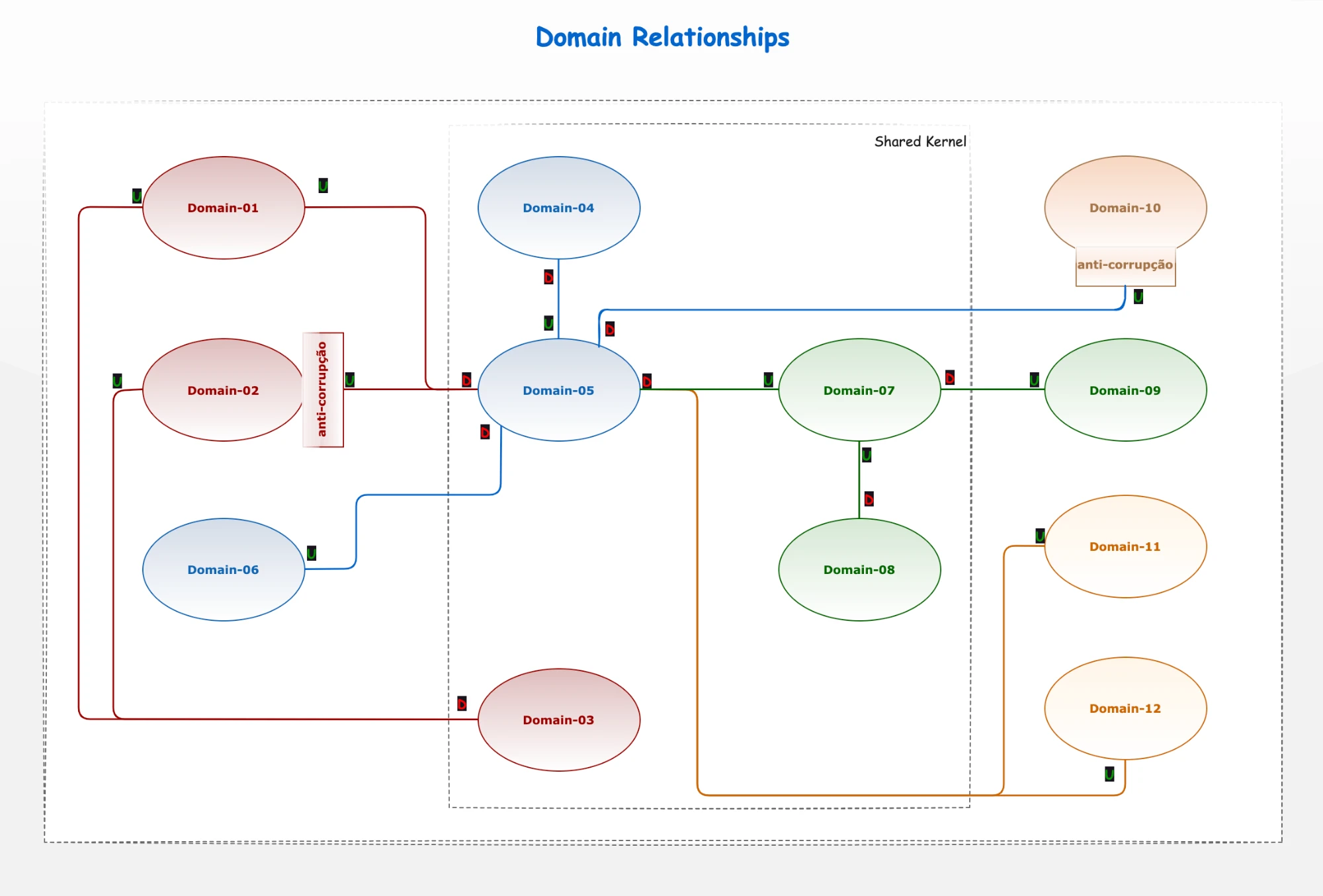
Domain Relationships
The relationships between twelve domains, with each link end marked U (upstream) or D (downstream), a shared kernel and anti-corruption layers.